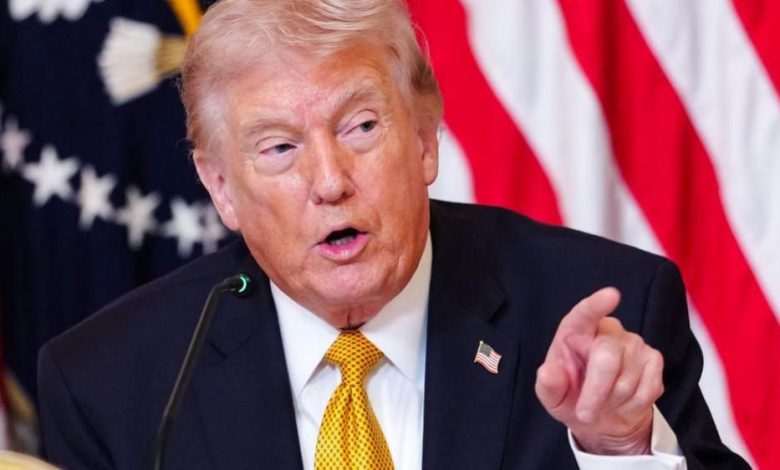
United States President Donald Trump threatened on Monday to hit Iran “hard” after the two sides traded fire for the first time in weeks, as Treasury Secretary Scott Bessent vowed to keep up a campaign aimed at weakening Tehran’s economy.
After six months of war the two sides remain at an impasse. Iran has kept the Strait of Hormuz closed; the United States has maintained a counter-blockade of Iranian ports. On Sunday American forces struck an Iranian island in the strait. Tehran responded by attacking US military targets in the region. The exchange raised fears of a return to major hostilities.
“We’re going to hit them hard,” Trump said, according to a Fox News reporter who spoke to him briefly. “There will be a response.” Washington said it had attacked Iranian rocket launchers on Larak Island to prevent mines being placed in the shipping lane. Iran said it fired missiles and drones at US forces in Jordan and the United Arab Emirates. President Masoud Pezeshkian later called for dialogue at a summit in Kyrgyzstan, saying continued war served neither Iran nor the region and that the solution was talks and cooperation.
Iranian state media reported three people killed in the Sunday strike on Larak. The Revolutionary Guards claimed heavy damage at two US air bases in Jordan; Trump said all missiles aimed at US forces had been shot down except one judged not to be a threat. Jordan’s army said it intercepted eight missiles. Abu Dhabi said it intercepted a drone over its waters and dismissed claims that Al Minhad Air Base had been hit. A tanker leaving the strait reported being struck by three unknown projectiles off Oman, with no casualties reported.
Bessent told reporters at a G20 meeting that pressure would continue and that a turning point could come within weeks or months. Iran, for its part, continues to squeeze oil traffic through Hormuz, which carried about one-fifth of world oil before the war. Mediators have failed so far to revive an earlier truce and memorandum of understanding. The latest firefight shows how quickly a period of economic pressure can return to open exchange—and how little either side has closed the gap on the waterway that still defines the conflict.