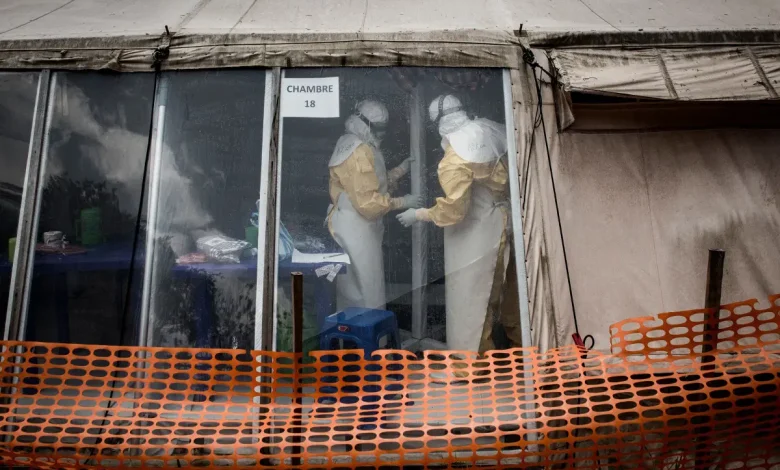
The current Ebola outbreak across Uganda and the Democratic Republic of the Congo (DRC) has reached 894 confirmed cases and 204 confirmed deaths. The Acting Head of the Emergency Preparedness and Response Division at the Africa Centres for Disease Control and Prevention (Africa CDC), Dr. Wessam Mankoula, disclosed the grim statistics on Thursday during an international health webinar.
The medical expert revealed that the outbreak has expanded rapidly within a single month since its initial declaration on May 15, 2026. According to health officials, the DRC currently drives the regional epidemic, with Ituri Province emerging as the volatile epicenter of the viral infection.
“North Kivu is the most worrisome area due to insecurity limiting responder access, resulting in a high case fatality rate and the lowest contact tracing coverage,” Mankoula stated. He added that the geographic spread now affects thirty-two health zones across both nations, ranking this as the third-largest Ebola outbreak in history.
Lack of licensed countermeasures threatens regional health security
The continent’s apex health agency declared a public health emergency of continental security just three days after confirming the initial cases. The organization has launched a unified continental response plan alongside the World Health Organization (WHO), requiring a six-month budget of 517 million dollars.
Mankoula noted that medical teams have successfully reduced laboratory testing backlogs from eight days to less than twenty-four hours. However, the lack of licensed medical countermeasures for the Sudan strain means control depends entirely on traditional contact tracing and daily monitoring.
“Without licensed vaccines or therapeutics for the Sudan strain, controlling the outbreak depends entirely on case identification, contact listing, and daily monitoring by community health workers,” Mankoula added. He warned that conflict, worker safety concerns, and low funding release continue to impede emergency operations.