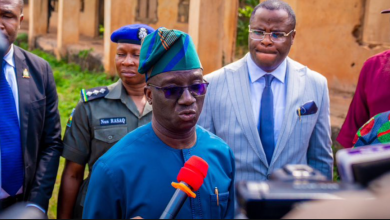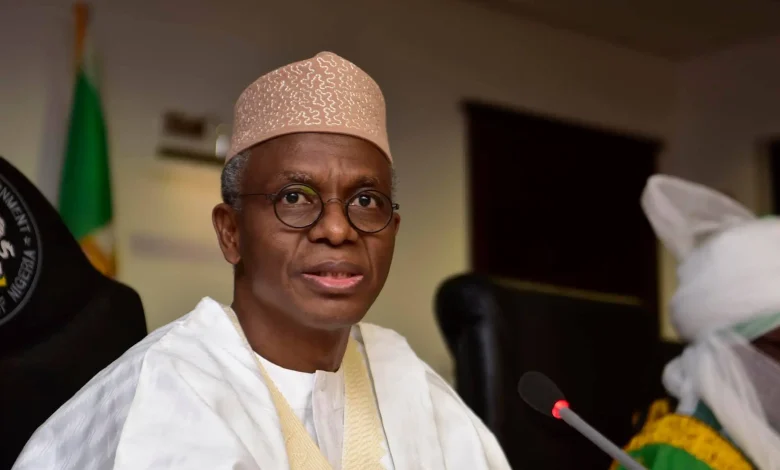
Detained former Kaduna State Governor Nasir El-Rufai on Wednesday told the Federal High Court in Abuja that his claim that the telephone of National Security Adviser Nuhu Ribadu was tapped was false. He said he made the statement to scare the government and make its officials uncomfortable.
El-Rufai described the claim as political rhetoric rather than a factual statement. He insisted that neither he nor other opposition figures intercepted Ribadu’s telephone conversations. He spoke while testifying as the first defence witness in his ongoing prosecution by the Department of State Services.
The former governor faces trial over comments he made during an appearance on Arise Television’s Prime Time programme on 13 February. Court documents state that he allegedly admitted knowing and associating with an individual who had illegally intercepted the NSA’s telephone communications. He is accused of breaching national security and public safety under Section 12(1) of the Cybercrimes (Prohibition, Prevention, etc.) (Amendment) Act 2024, and of failing to report the alleged crime.
During the interview El-Rufai alleged that DSS operatives attempted to abduct him at Nnamdi Azikiwe International Airport on 12 February upon his return from Cairo. He further alleged that the security agency was acting on the instigation of the Independent Corrupt Practices and Other Related Offences Commission, which he claimed had received a directive from Ribadu to detain him. The court on 26 October ordered him to open his defence after dismissing his no-case submission.
On Wednesday his lawyer, Paul Erokoro, SAN, played a recording of the interview. After listening, El-Rufai acknowledged making the claim but said it was not intended to be understood literally. “What I wanted to say was that the government was monitoring opposition figures and that we knew what they were doing. I used the word ‘tap’ as political rhetoric to make them uncomfortable. It was rhetorical, not literal. It was linguistic flourish, just to make the government uncomfortable,” he said.
He explained that he referred to the government violating the law. When asked who he meant by “we,” he said he meant himself and other prominent opposition figures. He denied that they tapped Ribadu’s phone and said he learnt of an alleged plan to abduct and detain him through a mutual friend, whose identity he declined to disclose. He told the court that the friend later clarified that he had not tapped the phone, and that El-Rufai already knew but had made the claim deliberately.
El-Rufai said he had known Ribadu since 2003. He attributed the breakdown in their relationship to the 2011 presidential election, when he supported Muhammadu Buhari while Ribadu contested. He further alleged that the NSA was opposed to him because of his opposition to President Bola Tinubu’s re-election bid. He denied possessing the knowledge or equipment to tap phone conversations.
Under cross-examination by prosecuting counsel Oluwole Aladedoye, SAN, El-Rufai refused to name the persons he referred to as “we” or the person who allegedly informed him of a meeting involving Ribadu, Kaduna Governor Uba Sani and the ICPC chairman.
He maintained that all other statements in the interview were true except the claim relating to the tapping of Ribadu’s phone. Justice Joyce Abdulmalik adjourned the case until 15 and 16 February for continuation of the defence.