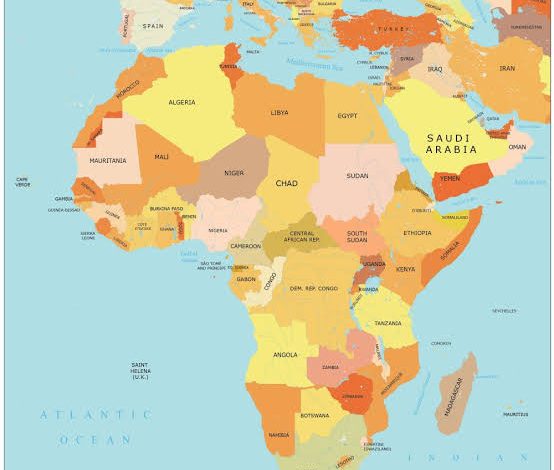
Nairametrics has released its ranking of the top 10 African economies that recorded the fastest growth in the second quarter of 2026, with Rwanda topping the list at 9 percent after a previous reading of -9 percent.
The data, shared on the platform’s Instagram and X accounts, highlights a mix of dramatic turnarounds and more modest gains across the continent. Nigeria placed second with growth of 2.97 percent, a sharp recovery from -19.64 percent in the prior period. Angola followed at 2.8 percent (up from 1.4 percent), Mauritius at 1.9 percent (from 0.9 percent), and Tunisia at 1.4 percent (from 0 percent).
The full ranking is as follows:
- Rwanda — 9 percent (previous: -9 percent)
- Nigeria — 2.97 percent (previous: -19.64 percent)
- Angola — 2.8 percent (previous: 1.4 percent)
- Mauritius — 1.9 percent (previous: 0.9 percent)
- Tunisia — 1.4 percent (previous: 0 percent)
- Ghana — 1.4 percent (previous: 1.6 percent)
- Botswana — 1.3 percent (previous: 9.2 percent)
- Kenya — 1.2 percent (previous: 1.3 percent)
- Uganda — 0.6 percent (previous: 1 percent)
- Namibia — 0.33 percent (previous: -0.38 percent)
Several countries posted notable reversals. Rwanda’s swing from deep contraction to 9 percent growth stood out as the strongest performance, while Nigeria’s move from nearly -20 percent to positive territory drew particular attention. Angola, Mauritius, Tunisia, and Namibia also improved on their previous readings. By contrast, Botswana slowed sharply from 9.2 percent to 1.3 percent, and Ghana, Kenya, and Uganda registered slight decelerations.
Nairametrics described the results as evidence of “impressive turnarounds” and “steady climbers” reshaping the continent’s economic landscape, inviting readers to comment on which country’s performance surprised them most. The post quickly generated discussion, with some users highlighting Nigeria’s recovery while others questioned the gap between headline growth figures and everyday living conditions.
The figures reflect the latest available Q2 2026 readings compiled by Nairametrics and differ from full-year IMF projections, which have generally pointed to stronger annual growth rates across sub-Saharan Africa in 2026. The quarterly snapshot underscores both the volatility still present in several African economies and the capacity for rapid rebounds when conditions improve.