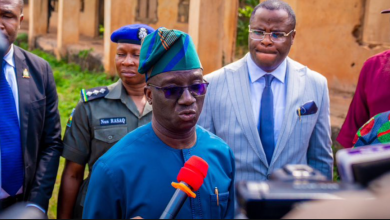
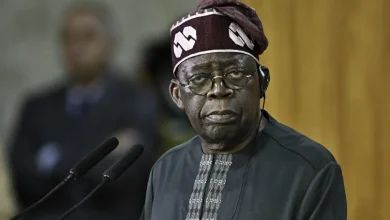
Vice-President Kashim Shettima has urged state governments to end their dependence on the Federal Government for solutions to local power problems and to set up functional electricity markets under the Electricity Act 2023.
He spoke on Wednesday at the opening of the National Stakeholders’ Workshop on the Electricity Act 2023 at the State House Banquet Hall, Presidential Villa, Abuja.
In a speech delivered on his behalf by Deputy Chief of Staff Ibrahim Hadejia, Shettima said Nigeria’s ambition of building a competitive industrial economy would remain constrained unless electricity reforms produced reliable power for businesses, households and public institutions.
He said the Act had created an opportunity to decentralise electricity governance and let states build power markets suited to their economies and resources. “The Act empowers states to develop and regulate intrastate electricity markets within the applicable constitutional and statutory framework. The size, diversity and endowments of this nation demand this decentralisation,” he said. “Our states must shed the habit of waiting for Abuja to provide every answer.”
Shettima cited solar potential in Sokoto, Borno and Katsina, gas resources in Delta, Rivers and Bayelsa, and hydroelectric opportunities in Niger and Kebbi, and urged states to turn them into investments that could power agriculture, manufacturing, healthcare and education. He warned that a law alone would not improve supply and told states that had yet to set up regulators to start without delay. “Legislation cannot implement itself.
States yet to act must begin their legislative and institutional preparations promptly.” He proposed a voluntary National Electricity Reform Peer Review and Implementation Framework involving the Nigerian Electricity Regulatory Commission, the Federal Ministry of Power, the Nigeria Governors’ Forum and state regulators.
Annual voluntary reviews, he said, should identify problems, facilitate technical assistance and promote practical solutions without undermining the constitutional powers of states. “No state needs to purchase with failure the knowledge another state has already acquired.”
Shettima said government could not finance the transformation from the treasury alone. “Private capital must arrive with technology and expertise. Transparent licensing, predictable regulation, commercially viable markets, investment safeguards and credible dispute resolution will earn investors’ confidence.” He also called for stronger consumer protection against arbitrary billing, poor service and unfair commercial practices. “The final verdict on this law will be delivered wherever a Nigerian reaches for a switch.”
Permanent Secretary of the Federal Ministry of Power Mahmuda Mamman, representing Minister Joseph Tegbe, said the Act’s success would depend on states’ ability to build credible institutions and commercially viable markets.
Director-General of the Nigeria Governors’ Forum Dr Abdulateef Shittu said work was under way on a standard tariff framework for states. Head of Compliance at the Electricity Commission Hauwa Yakubu said regulatory transfers had been issued to 17 states, the latest being Akwa Ibom. President Bola Tinubu signed the Electricity Act 2023 in June 2023, replacing the Electricity Power Sector Reform Act of 2005.
It allows states to license generation, transmission and distribution within their borders, while the national regulator keeps oversight of interstate matters. Generation companies said in March that they were owed about N6.8 trillion at the end of February and that national output had hovered around 4,000 megawatts for years against installed capacity of about 14,000 megawatts.
A vice-president has told states to stop waiting for Abuja and to establish competent regulators. A peer-review framework and private-capital conditions have been named. Seventeen states have received regulatory transfers. The gap between installed capacity and actual output remains on record.