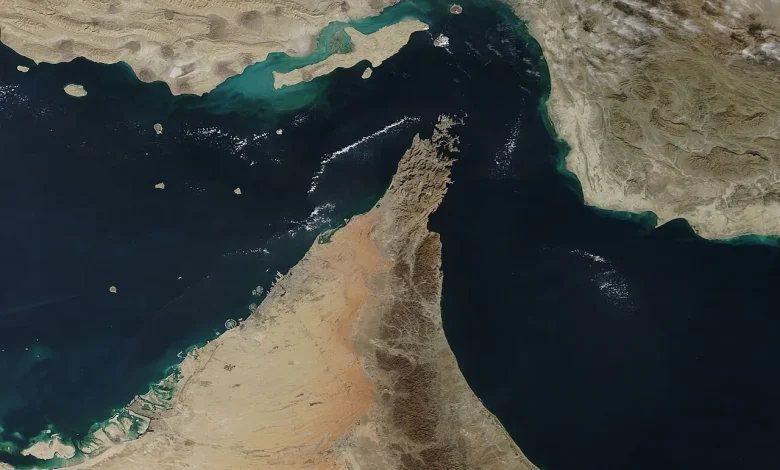
Iran and Oman have reached agreements on their respective share of the strategically important Strait of Hormuz and revenues generated from the waterway, Iran’s Islamic Revolutionary Guard Corps, IRGC, has said.
The development was disclosed by an IRGC spokesperson and reported on Wednesday by Iran’s semi-official Tasnim news agency, although details of the revenue-sharing arrangement and the precise scope of the agreement were not immediately made public.
The spokesperson also accused the United States of obstructing negotiations between Tehran and Muscat, saying the alleged interference had contributed to delays in reaching an agreement.
The announcement comes amid renewed diplomatic efforts by Iran and Oman to establish arrangements for navigation through the Strait, one of the world’s most strategically important maritime chokepoints.
The two countries have been negotiating a framework for managing navigation through the waterway, with Iranian Foreign Minister Abbas Araqchi saying earlier this month that Tehran and Muscat were close to reaching an agreement on a legal framework, including the designation of routes for vessels.
The negotiations have taken on greater significance after months of disruption to shipping through the Strait amid the wider confrontation involving Iran and the United States.
The Strait of Hormuz, located between Iran and Oman, connects the Persian Gulf with the Gulf of Oman and the wider Arabian Sea. It is a critical route for global energy supplies, with a substantial share of the world’s oil and liquefied natural gas shipments traditionally passing through the waterway.
Recent data showed that commercial traffic through the Strait remained significantly below normal levels. According to preliminary Kpler data reported by Reuters, only five commodity vessels transited the waterway on Tuesday, compared with a 10-day average of 15 vessels.
The latest Iran-Oman announcement follows discussions between the two countries over a temporary navigational corridor intended to facilitate the movement of commercial vessels while broader negotiations continue.
Iran and Oman have also been discussing mine clearance and a new traffic-management arrangement for the waterway. The proposed framework is expected to address the routes available to commercial vessels and mechanisms for coordinating maritime traffic.