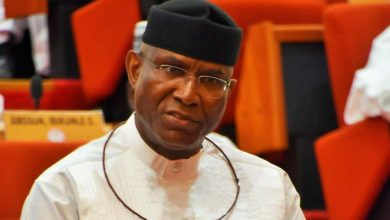
The Federal High Court sitting in Abuja has granted bail to the former Governor of Kaduna State, Nasir El-Rufai. Justice Joyce Abdulmalik delivered the ruling on Monday regarding the bail application filed by the prominent politician.
The court fixed the bail sum at N100 million in the ongoing trial over an alleged breach of national security. Justice Abdulmalik imposed a series of stringent conditions that the defendant must fulfill before gaining his freedom.
Surety must meet high-level civil service requirements
The court ordered Nasir El-Rufai to provide one reliable surety in the exact same sum of N100 million. The judge stipulated that the surety must reside within the highbrow Maitama or Asokoro districts of the Federal Capital Territory.
Furthermore, the surety must be a top federal civil servant not below Grade Level 17 in the service. The individual must deposit the original Certificate of Occupancy of a valid landed property at the court registry.
Security agencies to track former Governor monthly
As part of the strict bail terms, Nasir El-Rufai must deposit all his valid international passports with the court registry. The judge also ordered the politician to report to the Department of State Services (DSS) headquarters regularly.
The defendant must sign an attendance register at the DSS headquarters every last Friday of the month at 10 a.m. Justice Abdulmalik warned that any failure to comply with these terms would lead to an automatic revocation of the bail.
High Court orders accelerated trial for defendant
The court directed the defense team to provide a letter of attestation from the Chairman of the Kaduna Traditional Council. A tax clearance certificate covering the last six months must also accompany the verification documents.
Justice Abdulmalik balanced the stringent bail conditions by ordering an accelerated trial of the criminal charge against the politician. The federal government has vowed to prosecute the matter diligently to protect national security interests.