The Federal Government of Nigeria has introduced a new policy to strictly regulate non-state schools such as private, faith-based, and community schools. This policy sets clear rules about how these schools should be built, what they teach, and the qualifications of their teachers. The goal, according to the government, is to improve education quality and make schools more accountable.
Yet, this move is quite ironic: while the government focuses on policing private schools, Nigeria’s public schools remain in a very poor state, struggling with deep problems.
What does the New Policy do?
– Non-state schools must meet official standards for buildings and classrooms.
– They must follow guidelines on what and how they teach.
– Teachers must be well qualified and sometimes registered with professional bodies.
– The policy gives some financial incentives to private schools that admit children who are out of school.
The State of Public Schools
Despite new rules for non-state schools, public schools face serious, unresolved problems:
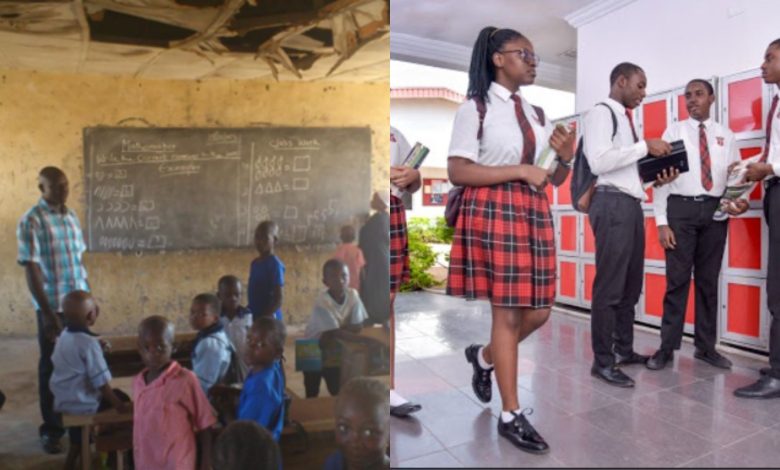
Many public school buildings are old and broken down. Some classrooms do not have roofs, floors, or even enough desks. In some places, children study outside under trees because their schools are still unrepaired after storms.
There are big shortages of teachers in Nigerian public schools—almost 195,000 teachers are needed in primary schools alone, with those present facing poor pay and poor training.
The money promised for fixing public schools is often too little to make any real change, and is sometimes not well managed.
-Millions of Nigerian children – more than 18 million – are still out of school, most of them from low-income families who cannot rely on failing public schools.
Why Is This Ironic?
Private schools have become necessary because so many parents cannot trust public schools to give their children a good education. Private schools have grown by nearly 39% in recent years, while new government-run schools have barely increased. Non-state schools are filling the gaps where the government has not done enough, especially in crowded cities and rural areas.
It seems strange that, instead of fixing its own schools first, the government chooses to make strict rules for the schools that are trying to solve these problems. Private schools are required to have better buildings, better teachers, and safer classrooms, while many public schools cannot meet these same standards. Regulating private schools may even make it harder for poor families to access affordable learning options, as some small informal schools may not survive the tougher rules.
Many experts and parents believe the government should focus its energy and resources on improving public schools. They argue that until public education is fixed with safe buildings, enough qualified teachers, and proper funding, placing more rules on private schools distracts from the real emergency. Some describe the policy as “regulating the lifeboats while neglecting the sinking ship”.
It is ironic that with all the issues in public education, the government’s main action is to regulate the schools that are meeting urgent community needs. Until public schools are truly fixed, this policy risks seeming out of touch and could even make access to education harder for the children who need it most. If the real goal is better education for all, Nigeria must invest far more in making public schools safe, well-staffed, and reliable.